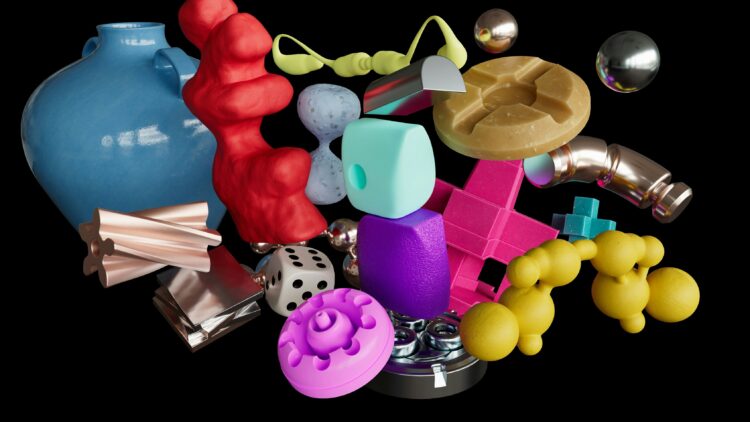
Sensory fidget toys are designed to provide tactile, visual, or auditory stimulation through repetitive motion. They are widely used by children and adults to help improve focus, manage stress, reduce anxiety, and support sensory regulation. When used appropriately, fidget toys are valuable tools that support well-being across all age groups. But where do yu start browsing?
In this article, I will tell you a little bit about the most common types of sensory fidget toys and the specific advantages each offers (as well as the downsides!).
Choosing Toys: Tips for Getting Started
Sensory fidget toys come in a wide variety of forms because sensory needs are not the same for everyone. Some people seek constant movement, others benefit from pressure or texture, while some respond best to visual or auditory stimulation. Understanding the different types of fidget toys helps users choose tools that match their specific needs rather than relying on trial and error.
Each category of fidget toy offers a unique kind of sensory input—from the rhythmic spinning of a fidget spinner to the deep pressure of a stress ball or the soothing visuals of a liquid motion toy. These inputs can help regulate the nervous system, improve attention, and provide a healthy outlet for restlessness or anxiety. For children, they may support learning and emotional development; for adults, they often serve as subtle stress-management tools in work or social settings.
The following sections break down the most common types of sensory fidget toys, explaining how they work and what advantages they offer.
1. Fidget Spinners
What are they? Small handheld devices that spin around a central bearing.
Fidget spinners are commonly used by children, teenagers, and adults who benefit from repetitive motion to release excess energy or reduce stress. Users typically hold the spinner between two fingers and flick the outer arms, allowing it to spin continuously while they focus on another task.
Fidget spinners are especially popular with school-aged children and teens, as they are simple to use and require little instruction, but they are also frequently used by adults during short breaks or moments of anxiety.
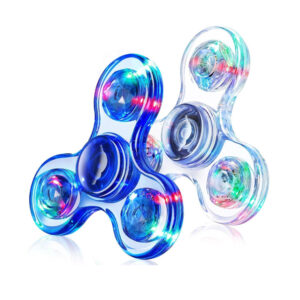
Fidget Spinners – Advantages:
- Encourages repetitive, calming motion
- Helps reduce nervous energy
- Useful for short breaks or stress relief
- Easy to carry and discreet
Fidget Spinners – Cons:
- Can become distracting if overused, especially in classrooms
- Produce noise or visual distraction when spinning rapidly
- Limited sensory variety compared to multi-function fidgets
- Bearings may wear out quickly with frequent use
2. Fidget Cubes (and Other Shapes!)
What are they? Compact cubes with buttons, switches, dials, and rollers on each side.
Fidget cubes are well suited for older children, teenagers, and adults who prefer varied tactile input. Users manipulate different sides of the cube depending on their sensory preference, often while studying, attending meetings, or watching lectures.
Because they offer multiple interaction options without drawing much attention, fidget cubes are commonly used by middle school students, college students, and office workers who need quiet, discreet sensory engagement
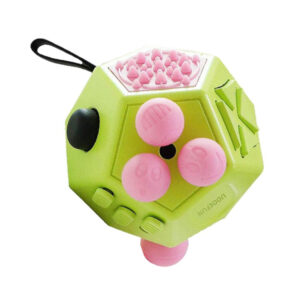
Fidget Cubes – Advantages:
- Provides multiple sensory inputs in one toy
- Improves concentration during tasks
- Ideal for restless hands
- Durable and long-lasting
Fidget Cubes – Cons:
- Buttons and switches may click loudly
- Limited durability on cheaper models
- Small size can make them easy to lose
- May not satisfy users who need stronger sensory input
3. Stress Balls & Squeeze Toys
What are they? Soft, squeezable toys made from foam, gel, or rubber.
Stress balls are appropriate for all age groups, from young children to seniors, as they are intuitive and easy to use. Users typically grip the ball or toy in one hand and apply pressure, releasing it slowly to promote relaxation.
These fidgets are often used for stress relief, hand strengthening, or emotional regulation and are common in classrooms, therapy settings, and workplaces
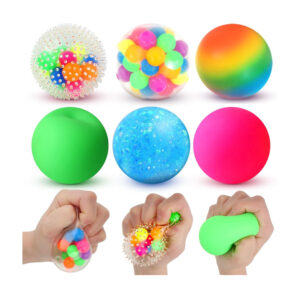
Squeeze Toys – Advantages:
- Relieves tension and anxiety
- Strengthens hand muscles
- Helps release pent-up stress
- Simple and intuitive to use
Squeeze Toys – Cons:
- Can lose shape or firmness over time
- Gel-filled versions may leak or burst
- Limited stimulation beyond squeezing
- May encourage repetitive stress if overused
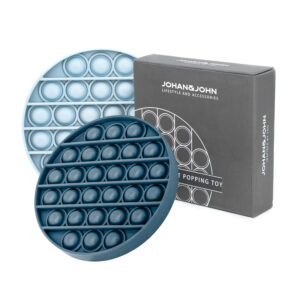
4. Pop-It & Bubble Fidget Toys
What are they? Silicone toys with pushable bubbles that make a soft popping sound.
Pop-it and bubble fidget toys are especially popular with younger children and elementary-aged students but are also enjoyed by teenagers and adults who find the repetitive motion calming. Users press the bubbles in and out, often in patterns or sequences, which can help with focus and fine motor skill development. These toys are frequently used during playtime, quiet time, or as calming tools in educational and therapeutic environments
Bubble Fidget Toys – Advantages:
- Provides tactile and auditory feedback
- Encourages fine motor skill development
- Reusable and easy to clean
- Popular for both play and calming routines
Bubble Fidget Toys – Cons:
- Popping sounds can be distracting in quiet environments
- Repetitive use may lose novelty quickly
- Larger designs are less portable
- Silicone can attract dust and debris
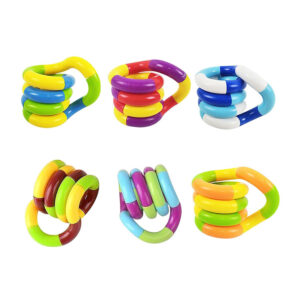
5. Tangle Toys
What are they? Interconnected curved pieces that twist and bend endlessly.
Tangle toys are well suited for children, teenagers, and adults who enjoy continuous hand movement without noise. Users manipulate the segments by bending and rotating them, often unconsciously, while concentrating on another activity. Tangle toys are commonly used in classrooms, counseling sessions, and offices because they promote focus and hand coordination while remaining relatively unobtrusive.
Tangle Toys – Advantages:
- Promotes bilateral hand movement
- Improves focus and dexterity
- Ideal for sensory seekers
- Quiet and classroom-friendly
Tangle Toys – Cons:
- Segments may loosen or break with heavy use
- Limited resistance for users who prefer firm pressure
- Can be visually distracting if used constantly
- Not ideal for users who prefer stationary fidgets
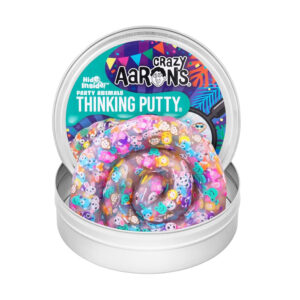
6. Putty, Slime & Therapy Dough
What are they? Malleable materials that can be stretched, rolled, or molded.
Putty, slime, and therapy dough are ideal for children and teenagers, though adults also use them for stress relief and hand exercise. Users interact with the material through squeezing, pulling, or sculpting, which provides both tactile stimulation and resistance. They are frequently used in occupational therapy, sensory play, and relaxation routines, especially for individuals who benefit from stronger sensory feedback.
Putty & Slime Toys – Advantages:
- Enhances sensory exploration
- Strengthens hands and fingers
- Supports creativity and relaxation
- Can be scented or textured for added stimulation
Putty & Slime Toys – Cons:
- Can be messy or stick to surfaces
- Requires supervision for younger children
- Can dry out if not stored properly
- Not suitable for all sensory sensitivities
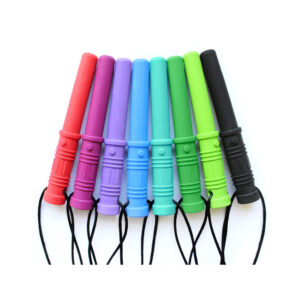
7. Chewable Fidget Toys (Chewelry)
What are they? Food-grade silicone necklaces or handheld chews.
Chewable fidget toys, often referred to as chewelry, are most commonly used by children and teens with oral sensory needs, though some adults also find them helpful for stress management. Users wear them as necklaces or hold them in their hands, chewing as needed to self-regulate. These fidgets are often used in classrooms, therapy settings, and at home to reduce habits such as nail-biting or chewing on non-food items.
Chewable Toys – Advantages:
- Helps manage oral sensory needs
- Reduces nail-biting or chewing on non-food items
- Safe alternative for sensory seekers
- Useful for stress and self-regulation
Chewable Toys – Cons:
- Wear down over time and require replacement
- May not be socially acceptable in all settings
- Requires regular cleaning for hygiene
- Not appropriate for aggressive chewers
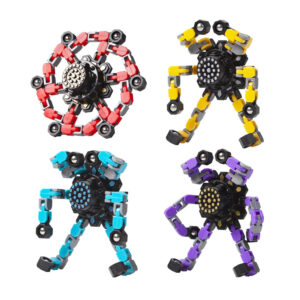
8. Magnetic Fidget Toys
What are they? Small magnetic pieces that click, snap, or connect.
Magnetic fidget toys are generally recommended for older children, teenagers, and adults due to the small parts involved. Users manipulate the magnets by connecting, stacking, or separating them, enjoying both the tactile feedback and the gentle clicking sensation. These fidgets are often used during breaks, study sessions, or creative play, as they encourage focus and fine motor control.
Magnetic Toys – Advantages:
- Provides satisfying tactile feedback
- Encourages fine motor control
- Engaging without being overwhelming
- Can be used creatively or repetitively
Magnetic Toys – Cons:
- Small magnets pose a safety risk if swallowed
- Can be noisy when snapping together
- Higher-quality sets can be expensive
- Easily misplaced due to small pieces
9. Visual Sensory Toys
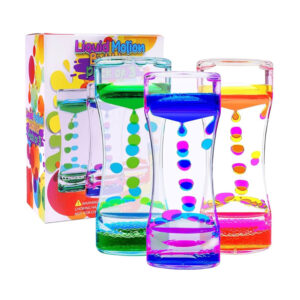
What are they? Includes liquid motion bubblers, glitter tubes, or color-changing toys.
Visual sensory toys, such as liquid motion bubblers or glitter tubes, rely primarily on visual stimulation rather than touch. They are suitable for all age groups, including young children and adults, and are often used in calming or mindfulness contexts. Users tilt or gently shake the toy and watch the slow movement of liquid or glitter, which can help regulate emotions and reduce overstimulation. These toys are commonly found in sensory rooms, classrooms, and relaxation spaces.
Visual Sensory Toys – Advantages:
- Offers calming visual stimulation
- Helps with emotional regulation
- Useful for relaxation or mindfulness
- Requires no physical manipulation
Visual Sensory Toys – Cons:
- Limited physical interaction
- Can break or leak if dropped
- Less effective for users who need tactile input
- Not ideal for use during active tasks
10. Textured & Tactile Fidgets
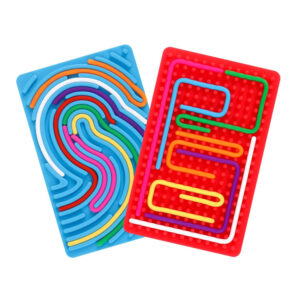
What are they? Objects with ridges, bumps, or varied surfaces.
Textured and tactile fidgets are appropriate for children, teens, and adults who seek subtle tactile input. Users rub, roll, or hold these fidgets in their hands, often during listening activities or moments of stress. Because they are typically quiet and discreet, textured fidgets are widely used in educational settings, therapy sessions, and workplaces to support focus and grounding.
Tactile Toys – Advantages:
- Stimulates touch-based sensory input
- Improves tactile discrimination
- Useful for grounding techniques
- Often quiet and unobtrusive
Tactile Toys – Cons:
- Sensory textures may irritate some users
- Limited engagement for long-term use
- Quality varies widely between brands
- May not provide enough stimulation for high sensory needs